

By Stephen Beech
Online shopping is more likely to trigger stress than catching up on the news headlines, according to a new study.
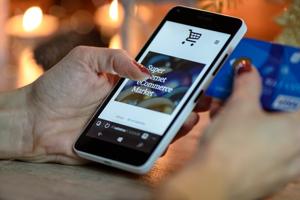
While many people see some internet retail therapy as a way to relax, research shows shopping, social media use and gaming are the most likely online activities to correlate with stress.
Scientists in Finland found that online shopping is more strongly linked to stress than reading the news, checking your inbox or watching adult entertainment.
The internet can be both a source and a reliever of stress, according to the research.
Study co-author Mohammed Belal, a doctoral researcher at Aalto University in Espoo, Finland, said: “Previous studies have shown that social media and online shopping are often used to relieve stress.
“However, our results show that a rise in social media use or online shopping is linked to an increase in self-reported stress across multiple user groups and across devices.”
The findings, published in the Journal of Medical Internet Research, showed that users of YouTube and streaming services, as well as online gamers, also reported increased stress levels.
For people experiencing high-stress, time spent on social media was twice as likely to be linked to stress as compared to time spent on gaming.
Meanwhile, across many user groups, those who spent more time reading emails and news, or watching adult entertainment, reported lower stress-levels – although the researchers noted that they looked only at the time spent on news sites, not their content.
Bela said: “Somewhat surprisingly, people who spent a lot of time on news sites reported less stress than others.
“On the other hand, those who already experienced a lot of stress didn’t spend much time on news sites – and that’s consistent with previous research that shows that stress can reduce news consumption.”
Overall, the study found a strong connection between internet use, in general, and heightened stress, especially among those who already experienced a lot of stress in daily life.
Women reported more stress than men, and the older and wealthier the participant, the less stress they experienced.
The de-stressing effect of adult entertainment may be explained by the fact that it was usually consumed in small doses, according to the research team, acting as a short-term stress or boredom reliever.
The research team recorded the internet usage of nearly 1,500 adults over a seven-month period.
After that, data from nearly 47 million web visits and 14 million app usages was combined with users’ self-reported stress.
The findings come at a time when the effects of social media on well-being are under increasing scrutiny.
For example, a recent ban in Australia on social media for children has the rest of the world watching closely.
But, despite the increasing influence of the internet on our lives, the researchers say scientific understanding of the impacts of its use on well-being is remarkably limited.
Belal said: “It leaves a huge critical gap in understanding how online behaviors impact stress and well-being.”
The Finnish study is among the first to use a tracking program installed on users’ devices, rather than asking subjects to self-report their usage.
Dr. Juhi Kulshrestha, an Assistant Professor at Aalto University, believes that the long duration and large sample size of the research also make the findings particularly significant.
But she says further research is needed to disentangle the relationship between stress and well-being and internet usage.
Dr. Kulshrestha said: “Are people more stressed because they are spending more time online shopping or on social media, or are such sites offering them an important support in times of duress?
“It’s really crucial that we study these issues further so we can solve that chicken and egg problem.
“Putting a blanket ban or upper limits on certain kinds of internet usage may not actually end up solving the issues, and could even take away a vital support for people who are struggling.”
The researchers see practical applications for the results in the development of well-being and online services.
They plan to examine the consumption of different types of news – such as political, entertainment, or sports news – and how it relates to stress and other well-being variables.
The hope is that better data will lead to helping internet users maintain a healthy balance.
Dr. Kulshrestha added: ‘As we gain increasingly accurate information about people’s internet usage, it will be possible to design new kinds of tools that people can use to regulate their browsing and improve their well-being.”