
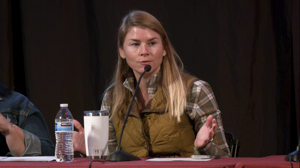
YAKIMA, Wash. – A water management panel discussion took place at the Yakima Valley Museum, drawing over 100 community members interested in addressing the potential third consecutive drought in Washington.
The panel featured representatives from the Bureau of Reclamation, Washington Department of Ecology, Yakama Nation, and the Yakima Basin. The discussion focused on the Yakima Basin Integrated Plan and its significance for the present and future.
Amanda McKinney, Yakima County Commissioner for District One, highlighted the plan’s benefits.
“By increasing the floodplain of the Yakima River and returning it more to its natural flow, we actually remove flood risk for our municipal infrastructure, actually take property out of flood zones, which lowers and expands our ability to develop areas. It removes people from a flood zone where they don’t have to have flood insurance, which reduces the cost for their housing,” she said.
Melissa Downes, Financial and Project Manager for the Washington State Department of Ecology, noted the project’s financial implications.
“This plan is going to cost over $4 billion with a B to implement over the next 30 to 40 years. And we’re ten years into that implementation. So building that partnership, investing in the science and technology, looking at those long term goals, are very important,” she said.
Sean Gilbert, President of Gilbert Orchards and a fifth-generation farmer, shared his past experiences with water scarcity.
“2015 was one [year] where I was actively managing the orchards in drought environment. We were we would have two weeks of water on two weeks of water off and what happens to an apple orchard when we have two weeks of without water in the middle of a big Yakima summer, the tree shuts down and it goes and undergoes a tremendous amount of stress,” he said.
The plan’s impact extends beyond humans to fish as well. McKinney emphasized the broader advocacy efforts.
“This is more of a conservation environmentalist view. My group who sits with us when we are advocating both in Olympia and in Washington, D.C. for a dam. So as an organization, they’re typically trying to take dams out. They are advocating for a dam. There’s support there because of the more time benefit because it actually is going to be used to benefit fish,” she said.
Quarterly workgroup meetings provide updates on the Yakima Basin, with the next meeting scheduled for Wednesday, March 12. More information can be found on the YBIP page