

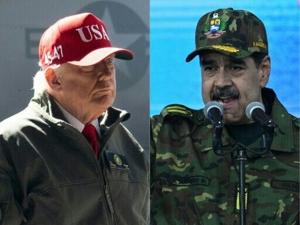
Republicans in the US Senate on Wednesday dealt an all-but-certain defeat to a rare war powers resolution that would have curbed President Donald Trump’s authority to use military force in Venezuela.
The measure advanced in a procedural vote last week after five Republican senators joined Democrats in support — a stunning setback for Trump after he ordered a strike that captured Venezuelan leader Nicolas Maduro.
The vote was widely seen as a rebuke of the Republican president’s Venezuela operation, which he authorized without notifying members of the Senate Armed Services Committee.
Trump lashed out at the defectors on social media within hours and the White House mounted an aggressive lobbying campaign to sink the resolution.
On Wednesday, Senate Republicans deployed a procedural maneuver — stripping the resolution of its “privileged” status, which would have allowed passage by simple majority — arguing that the rule did not apply because there are no ongoing hostilities.
That makes success in any final approval vote a near impossibility. Republicans have a 53-47 Senate majority, meaning there are not enough Democrats to push it past its new 60-vote threshold.
“Trump claims his war in Venezuela is righteous. If that’s the case, why is he browbeating his party into using a procedural scheme to avoid a debate and vote in Congress in front of the American people?” said Democrat Tim Kaine.
The Virginia senator spearheaded the resolution after US special forces captured Maduro in Caracas on January 3, saying it was meant to reaffirm Congress’s constitutional power to declare war.
It would have required Trump to seek congressional approval before taking further military action in Venezuela.
– Line in the sand –
Two of the five Republicans who backed it last week ultimately reversed course, US media reported, after receiving reassurances from Secretary of State Marco Rubio that there are no plans for boots on the ground and that Congress would be properly consulted if that changed.
After the preliminary vote, Trump declared the five should “never be elected to office again.”
But even if the resolution had cleared the Senate, it was largely symbolic: it faced near-certain defeat in the Republican-controlled House of Representatives and would have required a two-thirds majority in both chambers to override a Trump veto.
Democrats had cast it as a constitutional line in the sand after what they called months of misleading briefings — including assurances as recently as November that the administration had no plans for strikes on Venezuelan soil.
The White House argued the raid was legally justified as part of a broader campaign against transnational drug trafficking, framing it as a fight against cartels designated as terrorist organizations.
The five defectors initially warned that the operation could lead to deeper US involvement unless Congress reasserted its role.
But Trump thundered on his Truth Social platform that their push “greatly hampers” US national security and impedes his authority as commander in chief.
He has since warned that US involvement in Venezuela could last years, and posted a meme showing him as “Acting President of Venezuela.”
Since Trump returned to office, war powers resolutions on Venezuela have been rejected four times in Congress.
Over the last century, only one congressional measure has successfully imposed a lasting limit on unilateral presidential military action abroad: the War Powers Resolution of 1973, passed over then-president Richard Nixon’s veto.
ft/mlm