
The snow-lined street in the midwestern city of Minneapolis where Renee Nicole Good was gunned down by an immigration agent Wednesday lies less than a mile from the site of another slaying that shook Americans.
In 2020, George Floyd was killed by a police officer in the same neighborhood, sparking a wave of Black Lives Matter (BLM) protests here and across the country, as the United States examined bias in law enforcement and generations of fractured race relations.
But some now fear the act of protest itself, saying it has grown more dangerous under the Trump administration.
“I’d like to, but it’s scary, you don’t want to get shot in the face,” 26-year-old Grace told AFP, adding: “I’m not surprised that they shot and killed someone here.”
“I went to a protest before Christmas, and I was very scared about even going to that, even before anyone was shot.”
Grace said she joined BLM protests in the past and feared being tracked by the government then, but those concerns have grown “under this administration, where Trump just relentlessly pursues anyone in contrast to him.”
What’s worse, some comments online “are horrific, people saying she deserved it,” Grace said.
“I don’t know how we’re going to come back from this as a country.”
– ‘People are tired’ –
Like many Minneapolis natives, 36-year-old Anthony Emanuel was deeply shaken when George Floyd, a Black man, was murdered by a white police officer who knelt on his neck.
Floyd’s dying words — “I can’t breathe” — were chanted at protests across the country, and Emanuel took part.
But Emanuel, who works as a ride-share driver, is uncertain about protesting this time.
“I think people are just tired. And I think people are tired and still figuring it out, still going to work… still behind on bills,” Emanuel said, citing political and financial pressures that only grow in hard economic times.
“We’re still exhausted from George Floyd. We’ve still been rebuilding. And now another wave has come, and some people who had the energy don’t anymore.”
The street where Good was killed, Portland Avenue, runs from downtown Minneapolis to its southern neighborhoods.
It’s a road driven daily by Jessica Dreischmeier, 39, who works in children’s mental health care.
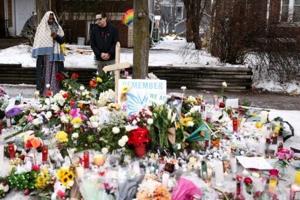
Despite the biting cold Thursday, she stopped to pay her respects at the makeshift memorial for Good, where dozens of bouquets and candles have been laid in the snow.
With wet eyes she confides she has mixed feelings: the awe of seeing those gathered to share her community’s grief “in such a kind of profound and respectful way” and the harsh contrast of knowing outsiders can “come and create havoc.”
From a distance, US President Donald Trump and his Vice President JD Vance were quick to defend the federal agent’s actions as self-defense, while local Democratic leaders strongly refuted that version of events.
“I don’t think that is a helpful approach for the leader of our country, to take that stance really recklessly. I think makes people feel a lot of deep rage,” Dreischmeier said.
Meanwhile, Minneapolis City Council member Jason Chavez on Thursday called for the immediate arrest and firing of the ICE agents who “were complicit in the act,” adding: “They need to be held accountable for their atrocities. And we will take nothing less than that.”
es/sla/abs