

By Stephen Beech
Dogs and cats are helping to spread an invasive species, reveals new research.
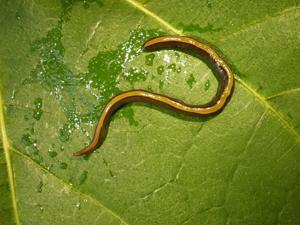
Domestic animals are involved in the movement of flatworms, say scientists.
They explained that terrestrial flatworms are invasive species that primarily move around the globe through the transport of plants, largely driven by human activities.
But the research team wanted to find out how such very slow-moving creatures manage to colonize neighboring gardens.
Scientists analyzed more than 12 years of reports collected through citizen science initiatives in France.
Their findings, published in the journal PeerJ, uncovered a previously unsuspected role played by domestic animals.
Study co-author Professor Jean-Lou Justine said: “Flatworms were indeed found attached to the fur of dogs and cats.
“Surprisingly, among the roughly 10 flatworm species that have invaded France, only one appears to be involved: Caenoplana variegata.
“Its particularly sticky mucus, associated with its arthropod-predator diet, as well as its ability to reproduce without a partner, facilitate its dispersal.”
Justine, of the French Museum of Natural History in Paris, added: “Given the considerable distances travelled each year by domestic animals, this mode of transport may significantly contribute to the global spread of certain invasive flatworm species.”