

By Stephen Beech
An ultra accurate footprint tracker has been developed to monitor endangered tiny mammals.
The state-of-the-art technology can identify species which were previously only distinguishable by DNA, say scientists.
While less visible than dwindling lion or panda populations, ecologists explained that the “quiet crisis” of small mammal extinction is arguably worse for biodiversity.
They say the creatures are “crucial” indicators of environmental health.
But they can be very hard to monitor as many species with very different ecological niches look almost identical.
But now scientists have developed a new way of identifying and monitoring the tiny mammals using their footprints.
The technology was tested on two near-identical species of sengi, native to southern Africa, and found to be up to 96% accurate, according to a study published in the journal Frontiers in Ecology and Evolution.
Co-author Dr. Zoë Jewell, of Duke University Nicholas School of the Environment, North Carolina, said: “We had two key motivations for undertaking this study.
“Firstly, to find a better, more ethical, and more scientifically robust way to monitor even the tiniest species, and secondly, to provide a reliable and broad metric for ecosystem integrity that can be applied routinely and regularly — a new pulse on the planet.”
She says that small mammals play a critical role in ecosystems and are very sensitive to any environmental changes, which means that changes in their populations can be important early warnings of ecological disturbances.
But many are near-identical “cryptic” species, which makes it difficult to monitor them accurately.
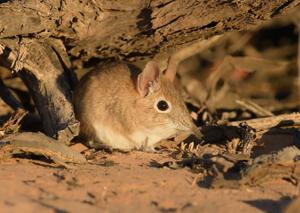
Dr. Jewell explained that is the case for the species the team used to test their footprint identification technology, Eastern Rock sengis and Bushveld sengis.
She said: “It’s often only possible to distinguish between cryptic species using DNA, which can be slow, invasive, and costly.
“It’s really important to know which is which, because although these species might look the same, they face different environmental threats and play different roles in the environment.
“For example, in our study, one of the sengis lives exclusively in rocky habitats and the other on sand, and each can act independently as an indicator in those environments.”
But she says there is one important distinction between the sengis: their feet are slightly different, leaving crucial differences in their tracks.
The research team set out to capture the differences and train a model that could distinguish between Bushveld sengis and Eastern Rock sengis’ footprints, like tracking animals with a computer.
The scientists collected sengis from Telperion Nature Reserve and Tswalu Kalahari Reserve in South Africa.
The 18 Bushveld sengis sampled were found only in Tswalu Kalahari Reserve, but a total of 19 Eastern Rock sengis were found at both sites, some occupying habitats very close to Bushveld sengis.
Dr. Jewell said that was an unexpected finding, because Tswalu Kalahari Reserve is outside the expected range of Eastern Rock sengis, and highlights just how important it is to improve monitoring of the species.
The sengis were captured using specially-designed traps loaded with comfortable bedding and a meal of oats, peanut butter, and Marmite – which they find particularly delicious – and then released into a box for collecting footprints.
Th box contained special paper with charcoal dust placed at each end, so that the sengis would walk through the dust and leave behind footprints.
They were subsequently released unharmed where they had been found.
Digital images of the footprints were then processed to identify shape and size features which could distinguish between the two species of sengi.
The researchers used front footprints, which were reliably the clearest and the most distinctive, and detected more than 100 possible features.
They then ran a statistical analysis to show which combination could identify sengis most accurately.
The nine diagnostic features selected were then challenged with single images and sets of sengi tracks reserved for testing, to see how well the footprint identification technology would perform.
It identified the species with 94% to 96% accuracy across all the tests.
This footprint identification technology can now be used on pictures of sengi tracks, as a non-invasive, cheap, and simple way to help detect the different species’ presence and monitor changes in populations and ranges.
The research team also plan to expand the technology to other species, using new datasets to train similar models.
They hope to compare the technology to other non-invasive methods of monitoring species, to see how they can complement each other.
Dr. Jewell added: “Small mammals exist in almost every ecosystem on the planet, and our tech is flexible enough to adapt to every one.”