

By Stephen Beech
The fastest ever test for hepatitis C – taking just 15 minutes – could save millions of lives, according to new research.
It provides results up to 75% faster than current rapid tests and paves the way for same-day treatment, say scientists.
Chronic hepatitis C virus (HCV) infection affects an estimated 50 million people worldwide, causing more than 240,000 deaths each year mostly due to cirrhosis and liver cancer.
But scientists say that same-day results will help kickstart treatment for the infection, which is curable with medication, and could save millions of lives.
The highly accurate test, developed by researchers at Northwestern University in Illinois, delivers results to patients in just 15 minutes.
They say speed is “crucial” for kickstarting patients’ treatment before they leave their appointment, potentially preventing painful, expensive complications and even death.
While the infection is curable with an eight- to 12-week course of medication, treatment rates remain low partially due to lack of affordable and easily accessible diagnostic tests.
Professor Sally McFall, co-director of the Centre for Innovation in Global Health Technologies (CIGHT) at Northwestern University McCormick School of Engineering, developed the test.
She said: “We were able to develop a diagnostic test that can be performed at the point of care during a patient’s clinical visit, which could enable same-day diagnosis and treatment in support of HCV elimination efforts.”
McFall said the test, described in The Journal of Infectious Diseases, has shown “excellent” analytical and clinical performance.
She says it could also play a “critical” role in achieving the goal of the World Health Organisation (WHO) to eliminate HCV by 2030.
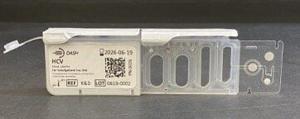
To develop the new rapid polymerase chain reaction (PCR) test for HCV, the scientists used the DASH (Diagnostic Analyzer for Specific Hybridization) PCR platform, which was originally developed at Northwestern University to detect COVID-19 from samples collected with nasal swabs.
The research team sent DASH analyzers and DASH HCV cartridges to collaborators at Johns Hopkins University, who then used 97 clinical specimens to evaluate the test’s performance.
The independent analysis confirmed 100% agreement when compared to commercial platforms.
Study co-author Dr. Claudia Hawkins, of Northwestern University, said: “This test could revolutionise HCV care in the U.S. and globally by dramatically improving diagnosis, accelerating treatment uptake and enabling more people to be cured faster.
“By reducing delays and simplifying testing pathways, it has the potential to save millions of lives from the devastating liver-related complications of untreated HCV.”
Hepatitis C diagnosis is currently a two-step process.
First, an antibody test determines if the patient was exposed to the virus.
If the result is positive, a second PCR test detects the presence of viral RNA to determine if the patient has an active infection.
Health care workers usually send the PCR sample to a central lab for testing, which can take days or even weeks.
The patient must then return to their doctor to receive results.
McFall says that although the Food and Drug Administration has approved one other point-of-care HCV test, results still take 40 to 60 minutes – much longer than the typical clinical appointment.