

By Michael Lee Simpson
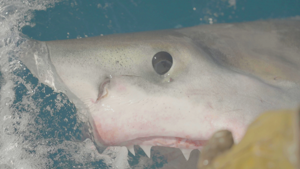
A nearly 12-foot great white shark is patrolling the shores of a major tourist destination.
Tagged in Georgia in 2022, the 700-pound female named Ormond has shown remarkable independent migration patterns, covering vast stretches of the Eastern Seaboard each winter, experts revealed.
Tagged with a tracker by researchers from OCEARCH, the tech has revealed she is patrolling North Carolina’s Outer Banks – a 200-mile-long chain of barrier islands off the coast of North Carolina, known for their wide beaches.
Her movements reveal great whites don’t travel in groups during winter, instead spreading out from the Carolinas to the Gulf of Mexico, experts said.
Tracking Ormond and other sharks helps scientists understand migration, behavior, and conservation needs while highlighting the species’ full winter range along the U.S. coast.
“Ormond right now is in the southeastern part of the outer banks, kind of on the far northern range of its typical winter range,” said Chris Fischer, founder of the nonprofit research group OCEARCH.
“She’s just south of Cape Hatteras, North Carolina, which is typically not further north than we’ll see white sharks during this time of year.”
Named after Ormond Beach, Florida, the shark was originally tagged in November 2022 near St. Simons Island, Georgia.
At the time of tagging, Ormond measured just under 10 feet long and weighed approximately 640 pounds.
Since then, the young female has established a migration pattern that showcases the remarkable range these ocean wanderers cover.
“Ormond has gone up north every summer and fall and back down in the winter,” Fischer said.
“She is a pinger who uses the entire winter range of these animals.”
The shark’s movements illustrate a key finding in OCEARCH’s research: great whites don’t move as a coordinated group once they reach their winter grounds.
Instead, they spread out independently across vast distances, from the Carolinas to the Gulf of Mexico.
“Right now, Ormond’s off the lower outer banks and probably sometime in March, if she does what she’s done the last several years, she will be in the far reaches of the Florida Panhandle over in the Gulf,” Fischer said.
“It’s just amazing to see how these animals use the entire winter range instead of just portions of it.”
This individual behavior pattern contrasts sharply with that of other marine species, which tend to school or migrate together.
Fischer emphasized that great whites “are not moving together at the same time — they’re moving independently once they arrive down here in their winter range.”
Currently estimated to be in her early to mid twenties, Ormond represents the future of great white shark populations along the Atlantic coast.
However, she still has years of growth ahead before reaching reproductive maturity.
“She’s probably gone from 10 to 11 feet plus” since her initial tagging, Fischer said.
“She’s still a subadult animal. We need her to get up into that 13 to 14-foot range before she’s able to reproduce.”
Ormond’s current position off the Outer Banks demonstrates how these sharks define the boundaries of their species’ winter habitat.
While she patrols the eastern edge of their range, OCEARCH is also tracking another shark, Ernst, near Dauphin Island, Alabama, which marks the western boundary.
The research provides crucial insights into the behavior and migration patterns of great white sharks, information vital for both conservation efforts and public safety at popular beach destinations.
As Ormond continues her winter journey, researchers anticipate she’ll eventually head toward the Gulf Coast, following the pattern she’s established over the past several years.
“These two sharks are basically on the far edges of the eastern and western components of these white sharks’ range,” Fischer said.
“It’s just interesting when you see them moving around because they’re covering the winter range.”
He added: “They’re demonstrating the fact that they’re really defining the furthest reaches of the majority of white shark movements across the winter.”