

By Stephen Beech
Fictional depictions of CPR are often “misleading” – and could cost lives, warns new research.
Dramas frequently show “outdated” CPR techniques – potentially fueling misconceptions that could delay potentially lifesaving interventions in the crucial moments after a real-life cardiac arrest, say experts.
Researchers found that scripted programs on American TV – including “Breaking Bad” and “Yellowstone” – often “inaccurately portray” who is most likely to need CPR and where out-of-hospital cardiac arrests happen.
An analysis of more than 160 TV episodes showed dramas tend to focus on white people or men receiving CPR, which mirrors real-life disparities where women and black and Latino adults are less likely than white people to receive CPR from a passer-by.
Researchers examined TV depictions of out-of-hospital CPR as a potential reason why there is a low prevalence of “hands-only” CPR performed outside of hospitals.
The study, published in the journal Circulation: Population Health and Outcomes, found that TV depictions of out-of-hospital cardiac arrest may mislead viewers about who is most likely to need cardiopulmonary resuscitation (CPR) and where it’s needed.
When a person suffers a cardiac arrest, receiving CPR immediately from someone nearby can double or triple survival rates.
But only around 40% of people experiencing a cardiac arrest outside a hospital receive the immediate help they need.
Study senior author Dr. Beth Hoffman said: “We know that TV depictions of health topics can influence viewers.
“We’ve also seen news stories about people saving lives because of the CPR they learned from watching it on screen.
“Considering the sheer number of people who watch TV, it’s important to think of how to leverage this to improve the likelihood that people will perform CPR and save lives.”
Researchers reviewed 169 American scripted TV episodes depicting CPR that aired after 2008 -the year the American Heart Association (AHA) endorsed “hands-only” CPR to encourage more people to act quickly to save the life of a teen or adult they see collapse from a cardiac arrest.
The shows were mostly dramas, such as Breaking Bad, Yellowstone or 9-1-1, and also included two episodes of the adult, animated sitcom Archer.
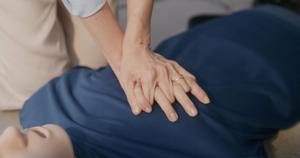
Hands-only CPR uses chest compressions only rather than the combination of breaths and compressions.
It has been shown to be just as effective as conventional CPR in quickly getting oxygen to the body’s vital organs, especially in the critical first few minutes after cardiac arrest in teens and adults.
The team’s analysis found more disconnects between TV and real life, in both who receives CPR from bystanders and where they receive it.
On-screen, 44% of recipients were between the ages of 21 and 40, whereas in reality, the average age of people receiving CPR is 62.
And in the shows studied, 80% of CPR recipients were in public and 20% were at home, but in actuality, 80% of out-of-hospital cardiac arrests happen at home.
The analysis found less than three out of 10 of the 169 TV episodes (29.6%) accurately portrayed hands-only CPR, calling 911 and beginning chest compressions.
More than half of the people who received CPR on TV were under the age of 40.
Out-of-hospital cardiac arrests portrayed on TV were more likely to happen in remote areas (37%) or in public spaces (26%).
Depictions of CPR in the TV episodes reviewed commonly featured males and white adults as both recipients and providers of CPR.
Study first author Ore Fawole said: “It was interesting that what we saw on screen mirrored real-life disparities in CPR receipt.
“It could be that what is on TV is a reflection of real-life, or that what people are watching on TV reinforces implicit biases or stereotypes that contribute to lower rates of CPR receipt for women, black adults and Latino adults.
“We hope that this research paves the way for accurate TV depictions of CPR that can help close the gaps on these disparities for all people to receive CPR and ultimately save more lives.”
The researchers said that the good news was that 58% of those who experienced a fictional out-of-hospital cardiac arrest received CPR, which is higher than the real-world likelihood of about 40%.
Dr. Hoffman, an Assistant Professor in the department of behavioral and community health sciences at the University of Pittsburgh School of Public Health, added: “In my volunteer work training Pittsburgh youth in CPR, there’s a lot of confusion.
“We ask students, ‘What’s the first thing you do?’ and they say, ‘Check for a pulse.’ But we don’t do that in bystander CPR anymore.
“And in our pre-course surveys, a lot of students say that they’ve seen CPR on social media and television.
“Those two observations inspired the study.”
Fawole, a recent Pittsburgh graduate who spearheaded the coding and analysis for the study, said: “If viewers think cardiac arrest only happens in public or to young people, they may not see CPR training as relevant to their own lives.
“But most cardiac arrests happen at home, and the person you save is likely someone you love.”
Collaborations between public health experts and content creators could help ensure that depictions of CPR “empower” viewers to act – and act correctly – when seconds count, according to the research team.
Dr. Stacey Rosen, volunteer president of the AHA, said: “Wouldn’t it be great if seeing CPR being used to save a life on TV motivated more people to act quickly if they witness an out-of-hospital cardiac arrest?
“Hands-only CPR is a simple two-step process – call 911 if you see a teen or adult suddenly collapse and then push hard and fast in the centre of the chest.”
She added: “Because no special training or equipment is needed, anyone can provide this lifesaving measure, even young children.
“That’s especially important because most out-of-hospital cardiac arrests occur in the home, so knowing CPR may help you save the life of someone you love.”