

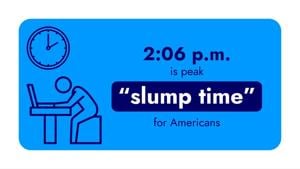
Americans hit their daily energy low at 2:06 p.m., according to new survey data.
A survey examining the energy levels and lifestyle goals of 2,000 people saw that on average, respondents said they’d need double their current energy levels to feel fully capable of keeping up with daily demands.
No wonder then that the majority of Americans surveyed felt added energy would be life-changing, not just for health and happiness boosts but also for their wallets. Seventy-four percent of respondents feel they’d be earning more if they had higher energy levels.
Conducted by Talker Research on behalf of Zipfizz, the survey also asked people what they would do with more energy and found surprisingly heartfelt responses.
When asked what they’d do with unlimited energy, the top response was spending more time with friends or family (18%).
If they could control when they receive an energy boost, people were divided. Twenty-four percent would use that energy lift on a Monday (24%), while Friday (22%) and Saturday (22%) followed closely behind.
“During the winter months, especially, energy dips can affect everything from motivation to connection,” said Marcela Kanalos, a spokesperson for Zipfizz. “What stands out is that, given more energy, people would prioritize time with loved ones, not just getting more done.”
The energy gap shows up most clearly in everyday life, with nearly half of respondents (44%) saying they don’t have enough energy to exercise as often as they’d like.
Social connection also takes a hit, as 34% said low energy prevents them from spending time with their social circles, while nearly a third said it limits outdoor activities (31%) and home-cooked meals (29%).
For many, this fatigue isn’t occasional; it’s routine. Nearly half of Americans surveyed said they feel too drained to do things they enjoy (45%). A similar pattern emerged when it comes to getting things done. Fifty-six percent said a lack of energy impacts their productivity.
While 41% feel their energy suffices most days, 25% said they are left exhausted after a full day of work.
That fatigue often comes with guilt. One-third of respondents (32%) said they feel most guilty about neglecting exercise or physical activity due to lack of energy.
Others pointed to falling behind on home organization (26%), self-care (25%) and even time spent with loved ones (21%), reinforcing how energy shortfalls affect both physical health and emotional well-being.
Looking ahead, Americans say more energy would fundamentally improve their happiness.
More than seven in 10 (71%) agreed they’d be happier if they had more energy to get through the day, and when asked how their energy levels have changed with age, 44% said they’ve declined.
“What stands out is how deeply energy influences both emotional well-being and daily function,” added Kanalos. “Lack of energy doesn’t just mean feeling tired; it can lead to guilt, missed opportunities and less time for the people and activities that matter most.”
Research methodology:
Talker Research surveyed 2,000 Americans who have access to the internet; the survey was commissioned by Zipfizz and administered and conducted online by Talker Research between Dec. 2 – Dec. 5, 2025. A link to the questionnaire can be found [here].
To view the complete methodology as part of AAPOR’s Transparency Initiative, please visit the Talker Research Process and Methodology page.