
Another blast of Arctic air was set to spread across much of the United States from Thursday night, even as local authorities struggled to dig out from mounds of snow and ice days after a giant storm passed.
The National Weather Service said polar winds would surge down from the Northern Plains across the Midwest and through the Gulf Coast, with a significant storm set to bring more heavy snowfall to parts of the southeastern US by the weekend.
Temperature lows could be broken, especially in Florida, the agency said, warning of statewide impacts on vulnerable populations as well as the crucial agriculture industry.
Frigid temperatures in the largely subtropical state can “cold-stun” iguanas, causing them to fall off trees in what has been referred to as a “lizard blizzard.”
The new cold front comes just days after a major winter storm, killing more than 100 people, according to tally of official figures and local media reports, as it blanketed a vast swath from New Mexico in the southwest to Maine in the northeast in snow, sleet and icy rain.
In the southern United States, hundreds of thousands of customers remained without power Thursday, according to poweroutage.us, with Tennessee, Mississippi and Louisiana hardest hit.
The Tennessee Emergency Management Agency said it had cleared more than 3,000 downed trees “because clearing trees is the gateway to recovery — protecting lives, restoring critical services, and helping power get back on.”
Meanwhile millions were still digging out from hardened snow.
In New York, excavators scooped piles of snow into steaming orange trailers known as “hot tubs,” which send the meltwater down into the city’s sewer system.
New York Mayor Zohran Mamdani was spotted traversing the city to shovel snow, earning praise but also criticism for not wearing a hat.
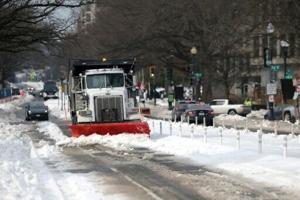
In the capital Washington, authorities were dumping truckloads of ice and snow at the site of the demolished Robert F. Kennedy stadium.
Washington residents have roundly criticized the official response, as numerous streets remained unplowed, snowbanks blocked road crossings and schools stayed shut for a full three days after the storm had passed.
Some research suggests climate change could be playing a role in disruptions to the polar vortex — a vast region of cold, low-pressure air that normally circulates high above the Arctic.
Scientists advancing this theory argue that uneven Arctic warming across Europe and Asia can amplify large atmospheric waves, making it more likely for the polar vortex to wobble and spill south over North America.
ia/acb