

By Lauren Beavis
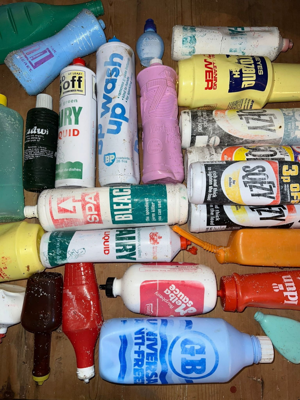
Hundreds of plastic bottles from 1960s Canada and Japan have washed up on a British beach.
The bottles, dating back to the 60s, 70s, and 80s, and hundreds of thousands of polystyrene pieces were discovered on Orkney, off Scotland.
Local litter pickers are “completely overwhelmed” by the volume of plastic pollution found at Howar Sands, in Sanday.
The area is a site of special scientific interest for nesting birds.
David Warner, 35, a local creative sustainability coordinator involved in organising beach cleans, said he gathered a total of 42 plastic bottles from the shore in 2025 – but this year he has already discovered over 400.
He said: “We have really beautiful beaches here and rubbish washes up regularly every month – but what is so shocking about what has happened here is that Howar Sands is normally pristine.
“A huge problem is the polystyrene pieces.
“I usually conduct a 100-metre survey and count how much debris I find, but because of the sheer magnitude of these pieces, I counted 1,094 of them in just one-square-metre.
“That means there is around 306,000 of these pieces on just a 70-metre stretch alone!
“We have nesting birds here – the impact on wildlife is horrendous.”
David said a significant amount of the debris has escaped from eroding sand dunes due to recent storms and rising tides caused by climate change.
He said: “Recent southerly winds and the increase in high tides have accelerated the erosion of the dunes – so all of this rubbish is coming out in such a big mass.
“We’re talking old rubbish has been hidden away for decades, from the 1960s, 70s and 80s.”
The keen environmentalist and member of the Sanday Community Craft Club says the community is keen to raise awareness of how big the problem really is on the island.
He also hopes to inspire others to think about their plastic consumption and is setting up an official large-scale beach cleaning group for the community – so in emergency situations such as this, people can go out together to help.
David added that the group will also enable people to share their interesting finds whilst litter picking as rubbish often washes up on the island from many different countries thousands of miles away, such as Newfoundland, Canada, America and England.
David has also set up an exhibition to showcase some of the island’s “rarer” beach clean finds and runs workshops teaching people how to repurpose discarded fishing gear – the most common form of ocean waste – into wreaths.
He said: “This is a consistent problem across every beach on all the islands.
“There is no monitoring of what is going on!
“It’s concerning because this rubbish we have found is from the 60s to the 80s – but where is the rubbish from the noughties and 90s, when plastic production really picked up?
“We have such beautiful beaches here but this is the sad reality of the situation.
“There isn’t really a solution we just need to stop buying plastic and think about whether we need what we have.
“It’s all about raising awareness in a positive way and encouraging people to get out and be a part of the solution.
“It’s bigger than us, but I won’t be able to sleep at night if I’m not doing my bit.”
FOX41 Yakima©FOX11 TriCities©