
Dry January has come to an end, but for a growing number of travelers, the break from alcohol isn’t. What began as a U.K. public health campaign more than a decade ago has gained traction worldwide, offering a way to reset drinking habits after the holidays.
That shift is showing up in how Americans drink, or more accurately, don’t drink. A 2025 Gallup poll showed that only half of U.S. adults said they consume alcohol, the lowest percentage in Gallup’s nearly 90-year history of collecting data on drinking behavior, suggesting that cutting back is no longer a fringe choice but a mainstream one.
“The appeal of Dry January isn’t abstinence itself, but giving people a set timeframe to notice how alcohol affects their sleep, digestion, and even energy levels,” says Whitney English, Registered Dietitian.
She adds that for some, that awareness makes it easier to carry those changes forward throughout the year, including when they travel, a time when routines are often disrupted.
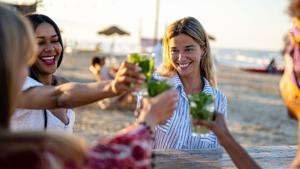
Alcohol-free or alcohol-light trips are moving from wellness retreats into broader vacation planning. According to CivicScience, 63% of adults age 21 to 34 who drink alcohol say they plan to take at least one alcohol-free vacation, while nearly a third are planning multiple “dry” trips.
Interest extends beyond just young travelers; Expedia Group reports that 41% of travelers are likely to book a detox-focused trip in the next year, and two-thirds of those age 25 to 34 say they are interested in staying at hotels where non-alcoholic beverages are available.
Reframing of the Resort Bar
Many resorts are redesigning the bar experience, treating alcohol-free drinks with the same creativity that traditionally goes into cocktails.
At Palmaia, The House of AiA, a luxury all-inclusive wellness retreat, the mocktail program is part of the broader wellness philosophy. Leading with alcohol-free beverages was a philosophical choice first, later reinforced by guest demand, according to the resort.
“We did not want the bar to be an exception to our wellness vision,” says Alex Ferri, founder. “If the food is thoughtfully plant-based-first and the programming is designed to support nervous system regulation and inner balance, it makes sense that the beverage program would also offer that same level of intention.”
Guests can still enjoy classic cocktails if they wish, but the menu starts with innovative, alcohol-free options as the main selection, offering what Ferri describes as an invitation toward presence, not escape.
Ferri says that while many of their guests do drink alcohol, they are also curious, health-conscious, and open to exploring new habits. “When they see a menu where the most creative options are alcohol-free, it sends a subtle message: you can still enjoy flavor, ritual, and beauty in a glass without always adding alcohol.”
Dry Tourism Moves Beyond Wellness Retreats
Dry tourism is also showing up in mainstream hotels and urban destinations. At Loews Hotels & Co, the company has introduced a Free Spirited program, featuring sophisticated non-alcoholic and low-alcohol beverages.
“There’s a misconception that mocktails are just juice in a fancy glass,” says English. “Well-designed non-alcoholic drinks use bitterness, acidity, texture, and aromatics, the same elements that make cocktails enjoyable.”
This summer, Loews is launching its Fizz by Loews Hotels, a spirit-optional soda program that reflects a renewed interest in carbonated drinks, thanks to TikTok’s “dirty soda” trend and the rise of upscale soda bars in cities like New York.
The program will feature house-made syrups, local ingredients, and customizable sodas and spritzes– like peach puree sodas at Loews St. Louis and piña colada-inspired spritzes at Loews Coronada Bay.
Shift In Expectation
The same travelers who expect alcohol-free programs at hotels and resorts are also seeking daytime, community-driven experiences that don’t revolve around alcohol.
In St. Louis, the trend is visible on Sunday mornings, when hundreds gather at local coffee shops for Sunday House Club, a sober, all-ages dance party that combines electronic music with coffee, good food, movement, and wellness.
Founded by former nightlife promoter Juan Beltran, these events reflect a growing appetite for social spaces that prioritize connection without the pressures of drinking culture. Beltran says the concept taps into the change he’s seen in how people socialize; they are drinking less and less, but still looking for new ways to connect.
The Sunday House Club parties offer something that many travelers want more of: positive community and celebration, but without a hangover.
Alcohol-Free By Design
While most properties offer mocktails and non-alcoholic spirits alongside traditional drinks, some destinations are built entirely around alcohol-free experiences.
Properties such as the Surf & Sand Pensacola and retreat centers like The Art of Living Retreat Center in North Carolina are alcohol-free stays, centering instead around mindfulness and connection.
At Surf & Sand, there is no on-property bar. Instead, the stay is built around activity: complimentary paddleboards, kayaks, water hammocks, and easy access to Pensacola Bay. Guests are invited to spend their time on the water, bikes, or nearby nature trails, not lingering at the swim-up bar, a model that shows how some coastal hotels are responding to this trend.
“When alcohol isn’t part of the daily rhythm, people often eat better, stay better hydrated, and are able to tune in more closely to hunger and fullness cues,” says English. On vacation, especially, that can make travel feel more restorative, rather than draining.