
By Dean Murray
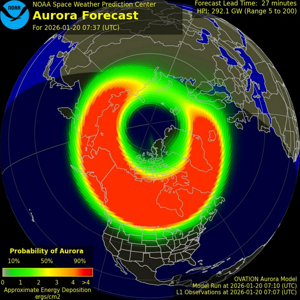
US space weather authorities have warned that Earth is currently experiencing the largest solar radiation storm in more than 20 years.
The NOAA Space Weather Prediction Center issued an alert at 8:52 a.m. UK time on Tuesday, Jan. 20, stating: “The last time S4 levels were observed was in October 2003. Potential effects are mainly limited to space launch, aviation, and satellite operations.”
Scientists say the storm, driven by heightened solar activity, could cause temporary effects on technology and communications, although most impacts are expected to be confined to aircraft and satellites operating at high altitudes.
Expecting disruption from the event, NOAA advised: “Infrastructure operators and authorities have been notified to take action to mitigate any possible impacts and for situational awareness.”
A NOAA warning on Monday listed effects such as the complete loss of high-frequency communications in polar regions, and “enhanced risk to space launch and satellites.”
The Met Office reported on Tuesday: “A Coronal Mass Ejection (CME) that departed the Sun on 18 January reached Earth on the evening of Jan. 19. G4/Severe geomagnetic storms were observed, producing widespread auroras visible across the UK, with reports extending as far south as northern Italy.”
Online reaction to Tuesday’s alert includes “Another reminder that the Sun is an active, living system and Earth feels it in real time,” and “G4 is where people stop watching auroras and start worrying about grids, satellites and GPS drift. This is infrastructure stress, not a curiosity.”